
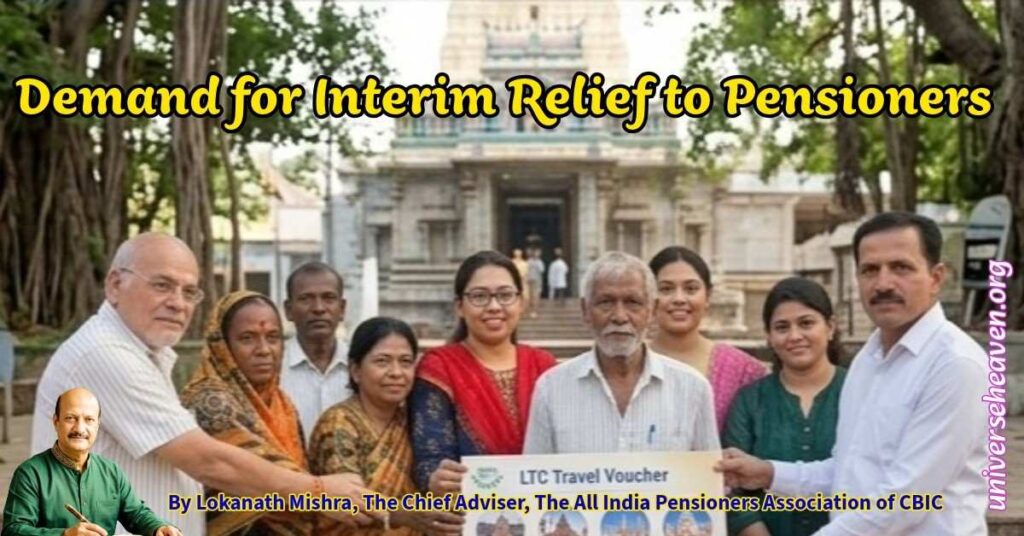
Demand for Interim Relief to Pensioners
By Lokanath Mishra, The Chief Adviser, The All India Pensioners Association of CBIC
The constitution of the 8th Pay Commission by the Government of India on 3 November 2025 has generated widespread expectations among Central Government employees and pensioners throughout the country. The Commission has been entrusted with the responsibility of reviewing salaries, pensions, allowances, and other service-related benefits of lakhs of employees and pensioners. It has also been directed to submit its recommendations within 18 months from the date of its constitution.
At present, the consultative phase of the Commission is progressing actively. Discussions are being held with employees’ unions, pensioners’ associations, administrative experts, economists, and various stakeholders from different sectors. The period for submission of memoranda has also been extended in order to ensure broader participation and to accommodate more detailed representations from organizations and individuals.
However, while discussions on revision of salary, pension, fitment factor, allowances, and arrears continue, the most urgent issue confronting the nation today is the deteriorating financial condition of pensioners. The implementation of the recommendations of the 8th Pay Commission is likely to take considerable time. Any prolonged delay in implementation will create severe hardship for lakhs of retired employees who are already struggling under rising inflation, increasing medical expenditure, escalating costs of daily necessities, and steadily declining purchasing power.
The present international situation has further aggravated the economic burden upon pensioners. The ongoing conflict involving Iran and the resulting instability in the Middle East have adversely affected global markets, fuel prices, transportation costs, and supply chains. These developments have directly contributed to rising prices of essential commodities and consumer goods in India. The worldwide economic slowdown and inflationary pressures are now being felt most severely by pensioners and senior citizens living on fixed monthly income.
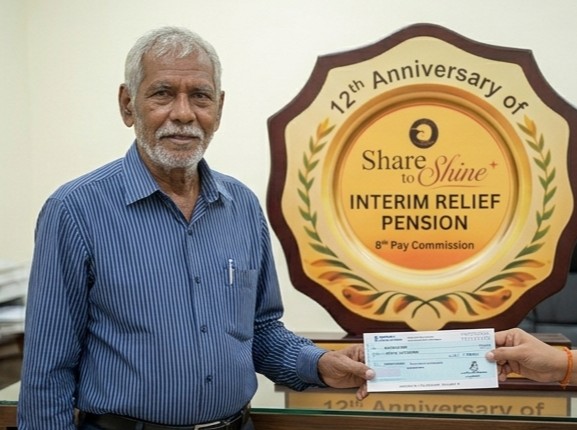
Under such extraordinary circumstances, the Government of India must seriously consider granting interim relief to pensioners immediately, pending the final implementation of the 8th Pay Commission recommendations. Interim relief is no longer merely a financial concession; it has become an urgent social and humanitarian necessity.
Why Interim Relief Has Become Essential
The practical reality is that more than six months have already elapsed since the constitution of the 8th Pay Commission. Nearly one-third of the Commission’s allotted time has already passed, while two-thirds still remain before the recommendations are finalized and submitted.
Even after submission of the report, substantial additional time will be required for various administrative and financial processes, including:
- Examination of recommendations by different ministries
- Consideration and approval by the Union Cabinet
- Financial assessment and budgetary allocation
- Issuance of official notifications
- Administrative implementation procedures
- Revision and calculation of pension benefits
- Processing and release of arrears
Consequently, the actual financial benefit may take a long time to reach pensioners.
During this prolonged period, retired employees continue to face enormous economic pressure because of:
- Escalating prices of essential commodities
- Rising healthcare expenditure
- Costly medicines and diagnostic tests
- Increased transportation and electricity expenses
- Dependence on private medical treatment
- Increase in housing and rental costs
- Continuous erosion of purchasing power
- Sharp rise in prices of goods due to instability in the Middle East and global economic uncertainty
Unlike serving employees, pensioners have no opportunity to improve their financial condition through promotion, career advancement, or additional annual increments in service. Their pension remains their sole source of livelihood. Many pensioners are also required to support dependent spouses, children, or family members despite their limited income.
Therefore, compelling pensioners to wait indefinitely for implementation of the 8th Pay Commission recommendations would impose severe hardship upon elderly citizens who have devoted the best years of their lives in service to the nation.
Interim relief has thus become a humanitarian necessity rather than merely an administrative measure.
Government’s Budgetary Concerns and the Need for Immediate Relief
One of the major concerns surrounding the implementation of the 8th Pay Commission is the growing financial burden arising out of arrears.
Whenever implementation is delayed beyond the effective date, arrears continue to accumulate over an extended period. Once released together, they create enormous pressure upon the government budget during a single financial year. Instead of distributing expenditure gradually over multiple years, the government is compelled to bear a concentrated fiscal burden at one time.
Such a situation may create both administrative complications and budgetary difficulties for the government.
In these circumstances, granting interim relief to pensioners at an early stage would actually be a practical, balanced, and financially prudent solution. It would:
- Reduce future arrear burdens
- Provide immediate financial support to pensioners
- Spread expenditure over multiple financial years
- Minimize sudden fiscal concentration
- Improve economic security for senior citizens
- Reduce financial anxiety among pensioners
- Maintain purchasing power in the economy
The government must appreciate that pensioners cannot become victims of procedural delays, prolonged administrative processes, and financial calculations.
⸻
Need for a Substantial Increase in Pension
The 8th Pay Commission must ensure that pension revision is meaningful, realistic, and capable of providing genuine relief to pensioners.
Over the last several years, inflation has substantially reduced the purchasing power of pensioners. Expenditure relating to healthcare, medicines, electricity, transportation, food items, and daily necessities has risen continuously. The burden is particularly severe upon elderly pensioners suffering from age-related ailments requiring continuous medical attention and expensive treatment.
Therefore, pension revision must not remain merely symbolic or arithmetic in nature. It should provide genuine financial security, dignity, and social protection to retired employees who dedicated their entire lives to public service.
A substantial enhancement in pension has become essential because:
- Life expectancy has increased considerably
- Healthcare expenditure has multiplied
- Medical emergencies have become more frequent among senior citizens
- Cost of medicines and treatment has risen sharply
- Inflation has eroded savings and retirement benefits
- Dependence upon pension income has increased significantly
- Elderly citizens require greater financial and medical support
The Commission must therefore recommend a pension structure that enables pensioners to live with dignity, independence, and security.
⸻
Need for a Proper and Scientific Fitment Factor
The fitment factor remains the foundation of both pay and pension revision. An inadequate fitment factor would defeat the very objective of the 8th Pay Commission.
The Commission must adopt a fair, scientific, and realistic fitment formula based upon:
- Actual inflation trends
- Cost of living index
- Healthcare inflation
- Housing expenditure
- Senior citizen dependency
- Urban and rural expenditure patterns
- Future economic uncertainties
Employees and pensioners across India are expecting a fitment factor that genuinely reflects present economic realities and protects them from inflationary pressures.

HRA, Annual Increment, and LTC Should Be Extended to Pensioners
One of the long-standing demands of pensioners is the extension of House Rent Allowance (HRA), annual increment benefits, and Leave Travel Concession (LTC)-type facilities to retired employees.
After retirement, many pensioners continue to live in rented accommodation, particularly in urban and metropolitan cities where housing costs have increased enormously. Despite paying substantial rent every month, pensioners receive no HRA support after retirement.
Similarly, pensioners and senior citizens often wish to undertake pilgrimages, family visits, or travel for emotional well-being and spiritual fulfillment. However, after retirement, travel expenses become difficult to manage because of limited pension income and increasing transportation costs.
Another important issue is the grant of annual increment to pensioners. Prices of goods and services continue to rise every year, but pensioners do not receive any structured annual increase comparable to increments granted during service. This gradually weakens their financial condition.
Therefore, the 8th Pay Commission should seriously consider:
- Introduction of suitable HRA support for pensioners
- Extension of LTC or travel assistance facilities to pensioners
- Grant of annual increment or annual pension enhancement
- Concessional pilgrimage travel schemes for senior citizens
- Special travel assistance for elderly pensioners above a specified age
Such measures would greatly improve the quality of life, financial stability, emotional well-being, and social dignity of retired employees.
⸻
CGHS Reform and Expansion of Wellness Centres
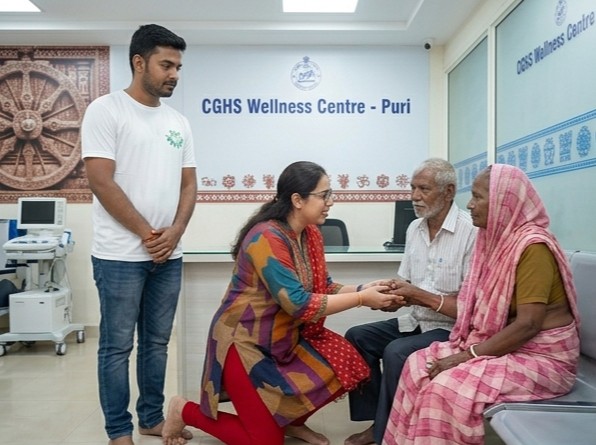
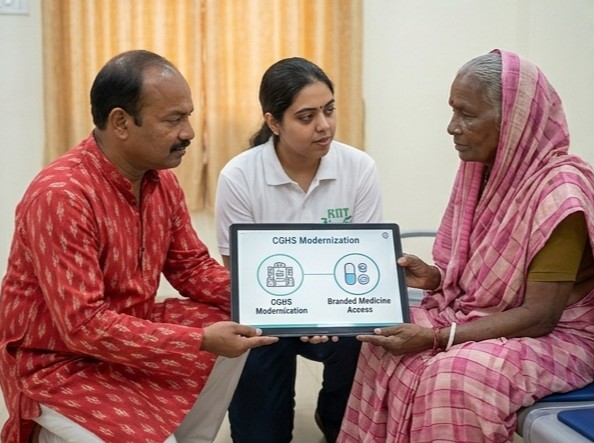
Healthcare remains the greatest concern of pensioners throughout the country. Although the Central Government Health Scheme (CGHS) has provided important medical support over the years, the system now requires urgent modernization, expansion, and administrative reform.
Large numbers of pensioners face serious problems such as:
- Shortage of essential medicines
- Non-availability of prescribed branded medicines recommended by specialists
- Non-supply of vitamins and supplementary medicines required by elderly patients
- Inadequate treatment facilities relating to dental care, eye care, and ENT treatment
- Delayed reimbursement of medical bills
- Long waiting periods at wellness centres
- Limited specialist consultation facilities
- Inadequate number of wellness centres
- Difficulties during medical emergencies
The 8th Pay Commission should strongly recommend comprehensive reforms of CGHS infrastructure throughout the country.
Most importantly, fully equipped wellness centres should be established at all major tourist and pilgrimage destinations frequently visited by pensioners and senior citizens.
Special attention must be given to the traditional Char Dham pilgrimage destinations:
- Ramanathaswamy Temple
- Dwarkadhish Temple
- Badrinath Temple
- Kedarnath Temple
- Jagannath Temple
Lakhs of pensioners and senior citizens visit these sacred places every year. Due to age-related illnesses and physical limitations, many of them require immediate medical support during pilgrimage and travel.
Therefore, wellness centres established at these destinations should provide:
- Emergency healthcare facilities
- Oxygen and cardiac support systems
- Qualified doctors and paramedical staff
- Essential medicines and life-saving drugs
- Ambulance services
- Diagnostic and pathological support
- Telemedicine facilities
- Digital CGHS connectivity and online records
Such measures would represent a major step toward compassionate governance, senior citizen welfare, and social responsibility.
⸻
Conclusion
The 8th Pay Commission is not merely an exercise relating to revision of salaries and pensions. It is an important opportunity to strengthen the social security framework for millions of retired government employees and senior citizens across India.
The immediate need of the hour is the grant of interim relief to pensioners so that they may be protected from financial hardship during the prolonged implementation process of the 8th Pay Commission.
Simultaneously, the Commission must ensure:
- A substantial increase in pension
- A fair and realistic fitment factor
- Introduction of HRA benefits for pensioners
- Extension of LTC facilities to pensioners
- Grant of annual increment or annual pension enhancement
- Comprehensive modernization of CGHS
- Establishment of wellness centres at all major tourist and pilgrimage destinations
The welfare of pensioners should never be viewed merely as an expenditure burden. It is a national responsibility toward those citizens who devoted their entire working lives to the service of the nation.
Today, the hopes of millions of pensioners rest upon the wisdom, compassion, and foresight of the 8th Pay Commission and the Government of India.
Excellent projection.
Sir, you have meticulously focused on every single point and have given a strong voice to the concerns, grievances, and unanswered questions of lakhs of pensioners. Through your dedication, perseverance, and deep understanding of these issues, you have brought much-needed attention to matters that affect the lives of countless retired employees.
Despite your own responsibilities and commitments, you continue to devote your valuable time and energy to this noble cause, guiding and supporting pensioners selflessly. Your efforts have not only provided hope and confidence to many but have also inspired others to stand up for their rightful dues.
Such sincere and compassionate service to fellow pensioners is truly commendable and deserves the highest appreciation. We are deeply grateful for your unwavering commitment and tireless efforts.
May God bless you with a long, healthy, and fulfilling life, and grant you the strength, wisdom, and good health to continue this remarkable work for many years to come. Our heartfelt prayers and best wishes are always with you.🌹
With profound respect and gratitude. 🙏