

Protocol Darshan in Indian Temples: Tradition, Privilege, and the Debate Over Equality:
India’s temples are not only places of worship but also centers of culture, tradition, and administration. Every year millions of devotees visit famous temples seeking darshan—the sacred sight of the deity. However, in many major temples across the country, a special arrangement known as “protocol darshan” exists. This system allows certain dignitaries or guests to have quicker or privileged access to the deity, often bypassing long queues.
Recently, the Shree Jagannath Temple Administration (SJTA) introduced a new Standard Operating Procedure (SOP) to regulate protocol darshan at the Jagannath Temple. The move has renewed discussions about whether protocol darshan is necessary and how it should be managed.
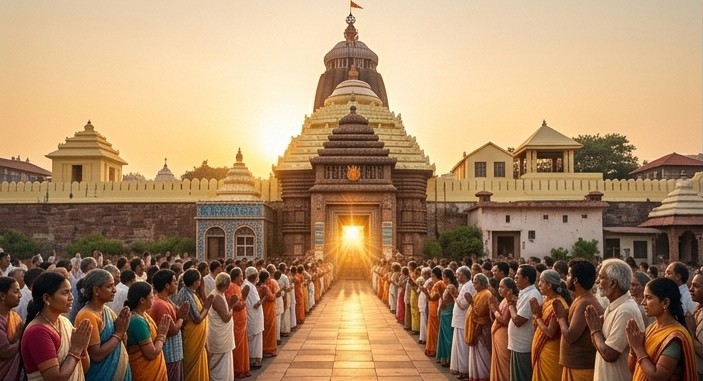
What is Protocol Darshan?
Protocol darshan refers to special access given to certain categories of visitors in a temple. Instead of standing in the general queue for hours, these visitors are escorted by temple officials through a designated entry route.
The purpose of protocol darshan usually includes:
- Ensuring security for high-profile visitors
- Maintaining administrative courtesy for state dignitaries
- Managing VIP movements without disrupting the general crowd
In many temples, protocol darshan is strictly limited and controlled, while in others it has evolved into a broader VIP system.
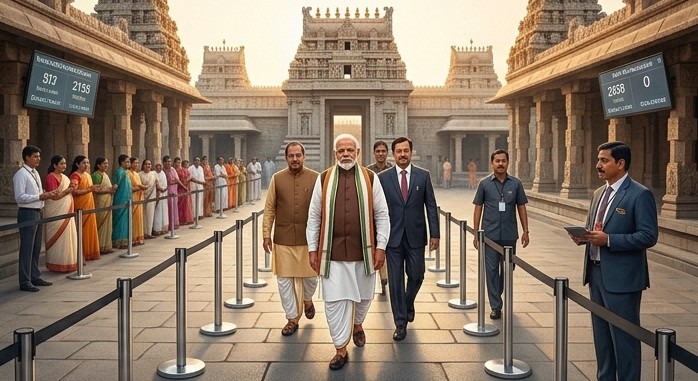
Who is Entitled to Protocol Darshan?
Typically, protocol darshan is granted to individuals who fall under official government or institutional protocol. These may include:
- The President, Prime Minister, Governors, and Chief Ministers
- Union and State Ministers
- Judges of High Courts and the Supreme Court
- Senior government officials
- Foreign dignitaries or official delegations
- Sometimes members of the temple’s governing body
In most cases, prior approval from temple authorities or government protocol departments is required.
Examples from Other Major Temples in India
Tirumala Temple (Andhra Pradesh)
The Tirumala Venkateswara Temple, managed by Tirumala Tirupati Devasthanams, has a well-structured darshan system.
- VIP Break Darshan exists for protocol dignitaries.
- There are paid darshan tickets (around ₹300) for general devotees who want faster access.
- The system is digitally managed with strict quotas.
This combination of paid darshan + protocol darshan helps regulate crowds of millions of pilgrims each year.
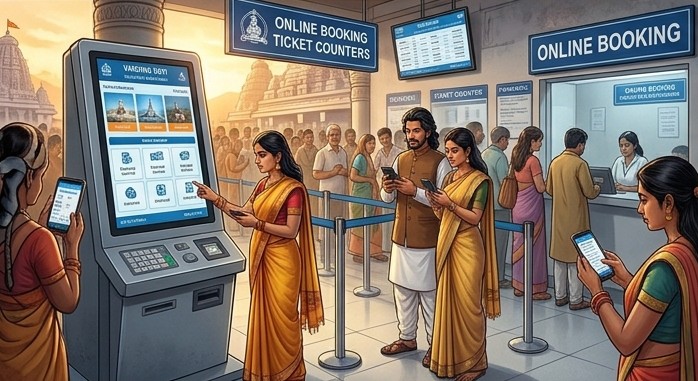
Vaishno Devi Temple (Jammu & Kashmir)
The Vaishno Devi Temple, managed by the Shri Mata Vaishno Devi Shrine Board, also has organized darshan categories.
- Free darshan through general queues
- Paid priority passes for faster entry
- Special arrangements for protocol dignitaries
Here, the shrine board uses online booking systems to manage pilgrims efficiently.
Shirdi Sai Baba Temple (Maharashtra):
At the Shirdi Sai Baba Temple, run by the Shri Saibaba Sansthan Trust, the temple offers:
- Free darshan for general devotees
- Paid VIP darshan passes for quicker entry
- Separate arrangements for official protocol guests
The paid darshan system helps manage large crowds and also contributes to temple revenue.
Why Doesn’t Puri Have a Fixed Price for Protocol Darshan?
The situation at the Jagannath Temple is unique because of its religious tradition and cultural philosophy.
- The Principle of Equality Before Lord Jagannath
Lord Jagannath is often called “Patita Pavana” (saviour of all). Historically, the temple tradition emphasizes that everyone is equal before the deity. Introducing paid VIP darshan could be seen as contradicting this belief.
- Traditional Temple Customs
The temple follows centuries-old ritual systems governed by servitors (Sevayats) and religious customs. Any major administrative change—such as paid darshan—can face resistance from traditional stakeholders.
- Legal and Administrative Sensitivity
The temple operates under the Shri Jagannath Temple Act 1955, and many changes require legal approval and consensus among servitors, government, and devotees.
- Fear of Commercialization
Many devotees believe that introducing paid darshan could commercialize the spiritual experience, which is a sensitive issue for a sacred and historically significant temple like Puri.
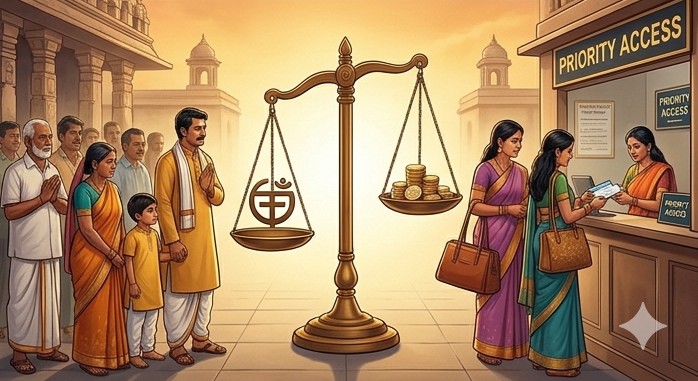
The New SOP by SJTA
The new SOP by the Shree Jagannath Temple Administration aims to bring discipline to protocol darshan.
Key points include:
- SJTA will fully manage protocol guests rather than leaving arrangements to external authorities.
- Strict guidelines for eligibility to prevent misuse of VIP privileges.
- Better coordination with security and temple servitors.
- Ensuring protocol visits do not disturb general devotees.
The goal is to reduce chaos and maintain the sanctity of the temple environment.
⸻
Is Protocol Darshan Necessary?
The answer remains debated.
Arguments in favor:
- Necessary for security and state protocol
- Helps manage high-profile visits without crowd disruption
- Ensures efficient temple administration
Arguments against:
- Creates a perception of inequality among devotees
- May contradict the spiritual ideal of equality before God
- Sometimes misused by non-eligible persons
⸻
Conclusion
Protocol darshan is a practical administrative tool used by many temples in India to manage dignitaries and large crowds. While temples like Tirumala, Vaishno Devi, and Shirdi have adopted paid priority darshan systems, the Jagannath Temple in Puri follows a more traditional approach rooted in equality and historical customs.
The new SOP introduced by SJTA reflects an effort to balance tradition with modern crowd management, ensuring that the sacred experience of darshan remains orderly and respectful for all devotees.