
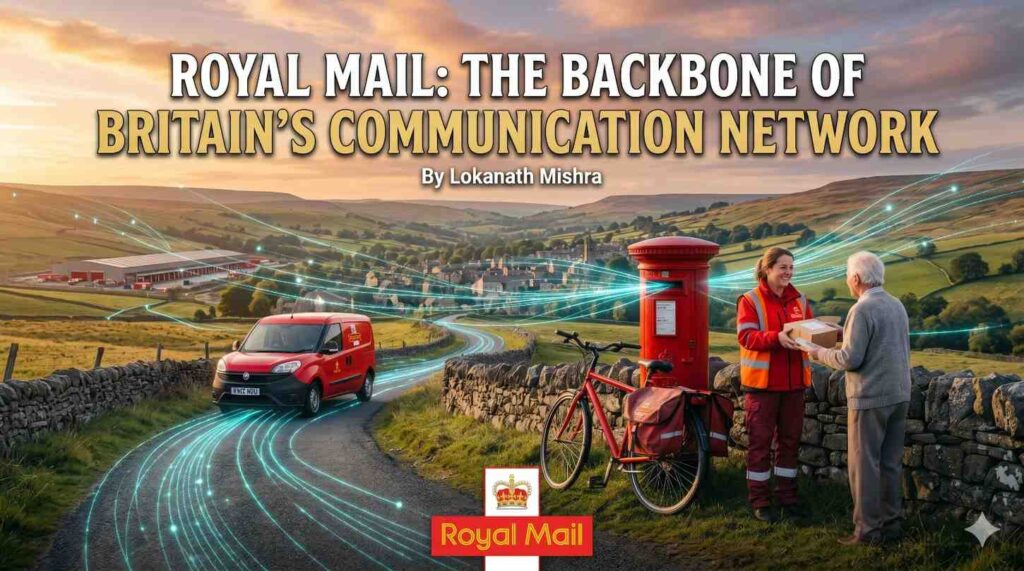
ROYAL MAIL: THE BACKBONE OF BRITAIN’S COMMUNICATION NETWORK
By Lokanath Mishra
For more than five centuries, Royal Mail has been an integral part of British society. Established in 1516 during the reign of King Henry VIII, it is one of the oldest postal systems in the world. Today, despite the growth of email, social media, and digital communication, Royal Mail continues to play a vital role in connecting people, businesses, and communities across the United Kingdom.
WHY ROYAL MAIL IS SO POPULAR
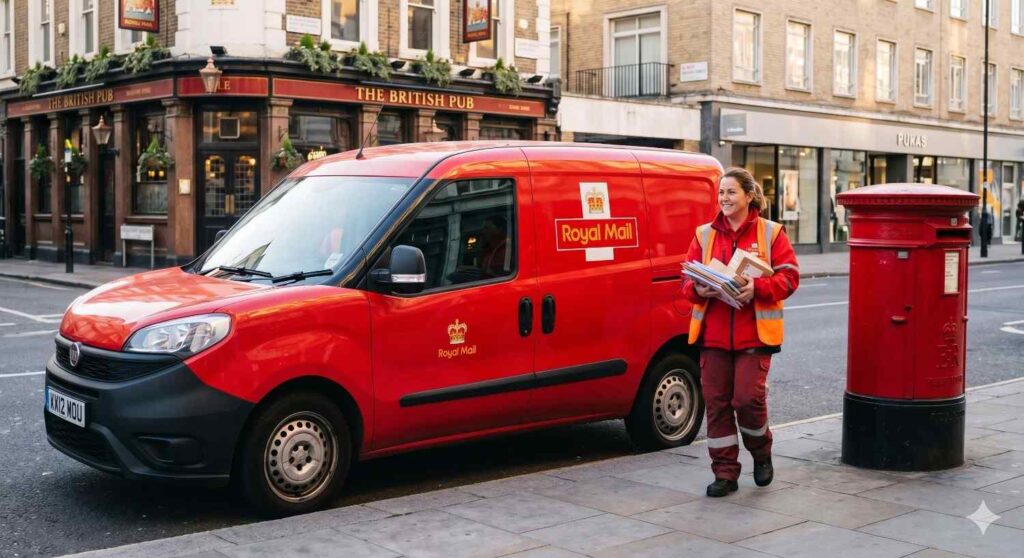
Royal Mail enjoys a unique place in the hearts of British people. Its popularity is based on reliability, nationwide coverage, and a long tradition of public service. The familiar red post boxes, red delivery vans, and uniformed postmen and postwomen are recognised throughout the country.
One of the main reasons for its popularity is the Universal Service Obligation. Under this arrangement, Royal Mail is required to deliver letters and parcels to every address in the United Kingdom at a uniform price, regardless of whether the destination is a busy city or a remote village in the Scottish Highlands. This “one-price-goes-anywhere” principle ensures equal access to postal services for all citizens. (House of Commons Library)

For many elderly people, rural residents, and small businesses, Royal Mail remains an essential service. Millions of letters and parcels are delivered every week, helping families stay connected and supporting the nation’s economy.
HOW ROYAL MAIL WORKS
The operation of Royal Mail is a remarkable example of logistics and organisation.
The process begins when a letter or parcel is posted in a post box or accepted at a post office counter. The item is then collected and transported to a local sorting centre. Modern automated machines sort mail according to postcode and destination.
After sorting, the mail is transferred to regional distribution centres and transported by road, rail, air, and ferry to different parts of the country. Once it reaches the destination delivery office, postal workers organise the items into delivery routes.

Every morning, thousands of postmen and postwomen set out to deliver letters and parcels directly to homes and businesses. Royal Mail’s network covers more than 30 million addresses throughout the United Kingdom. The organisation also handles international mail through agreements with postal services around the world.
In recent years, the company has increasingly focused on parcel deliveries due to the rapid growth of online shopping. Parcel volumes have risen significantly, while traditional letter volumes continue to decline. (The Guardian)
EMPLOYEES AND THEIR REMUNERATION
Royal Mail employs approximately 130,000 workers across the United Kingdom, including delivery staff, drivers, sorting-centre employees, technicians, customer service personnel, and managers. (The Times)
The remuneration of employees varies according to their role and experience.
Recent salary data indicate that delivery workers and postmen generally earn between £12.50 and £15.50 per hour. Drivers receive similar rates, while heavy goods vehicle drivers can earn considerably more. Customer service staff typically earn between £22,000 and £30,000 per year, and technical employees receive higher salaries depending on their skills and responsibilities. (Indeed)
In addition to wages, employees receive a range of benefits including paid holidays, pension contributions, sick pay arrangements, employee assistance programmes, training opportunities, and overtime payments where applicable.
In 2025, Royal Mail and the Communication Workers Union agreed a three-year pay settlement. The agreement included a 4.2% pay increase for 2025, followed by inflation-linked increases in subsequent years. The deal also provided additional opportunities for performance-related earnings and strengthened job security provisions. (CEP-Research)

CHALLENGES FACING ROYAL MAIL
Like many postal services worldwide, Royal Mail faces significant challenges. The volume of traditional letters has been declining for years as people increasingly use electronic communication. At the same time, customer expectations for faster parcel deliveries continue to rise.
The company has also faced regulatory scrutiny over delivery performance and must continually modernise its operations to remain competitive. Nevertheless, Royal Mail remains one of Britain’s most important public-service institutions and continues to adapt to changing times. (House of Commons Library)
CONCLUSION
Royal Mail is much more than a postal company. It is a symbol of national service, connecting every corner of the United Kingdom through an extensive and reliable delivery network. Its popularity stems from its long history, universal coverage, and commitment to serving all communities equally. While the challenges of the digital age are considerable, Royal Mail continues to evolve and remains an indispensable part of British life.