
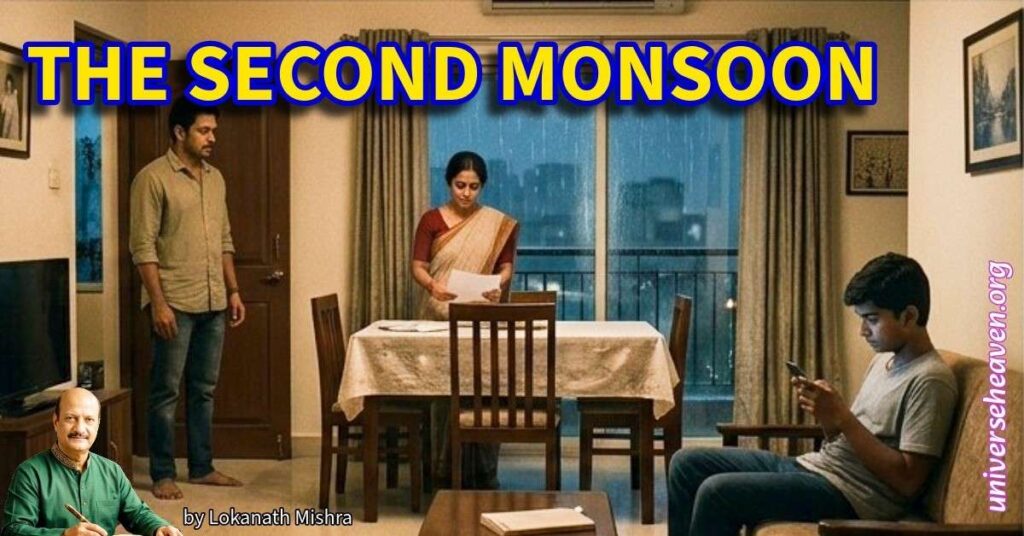
THE SECOND MONSOON
By Lokanath Mishra
In a quiet apartment near Rabindra Sarobar, mornings began with routine rather than joy.
Madhumita moved through life like someone honoring a promise she never made. Since Anirban’s death, her existence had narrowed into responsibilities—raising Ritwik, maintaining dignity, and preserving memory.
Anirban’s photograph hung in the living room. Fresh flowers appeared beneath it every morning.
Ritwik never forgot to change them.
At sixteen, Ritwik understood grief like an inheritance.
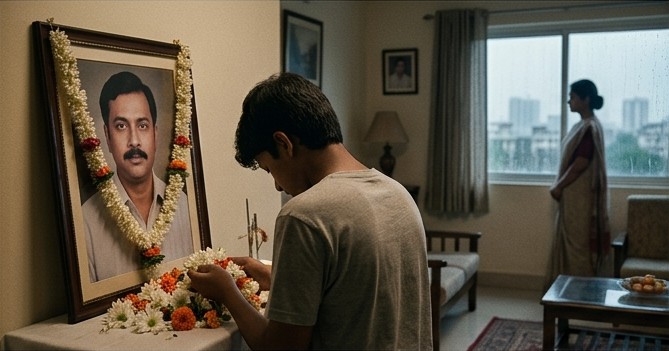
He remembered his father not just as a person, but as a standard—calm, dependable, unquestionable.
His mother’s world, in his mind, should have remained unchanged.
But life, he would soon learn, does not respect such expectations.
Arjun Dutta noticed details others ignored.
The way Madhumita paused before answering questions.
The way she avoided laughter, as if it might betray something sacred.
He met her during a cultural documentation project. What began as conversation turned into something deeper—an understanding neither of them planned.
“You live carefully,” he told her once.
“And you don’t,” she replied.
He smiled. “That’s why I notice.”
When Madhumita decided to marry Arjun, she didn’t announce it dramatically.
She simply said it one evening.
Ritwik’s silence was louder than anger.
“You don’t need him,” he said.
Madhumita replied softly, “Maybe I don’t. But I want to live.”
No grand rituals. No loud blessings.
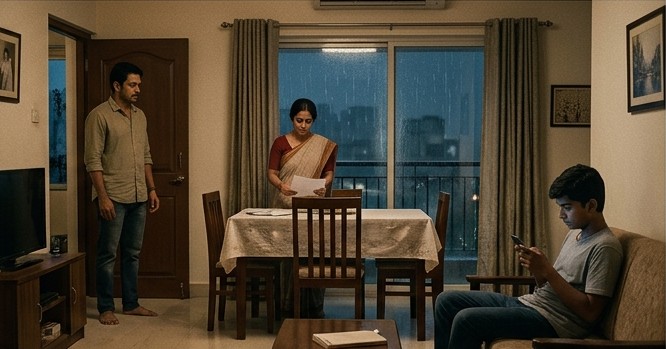
Only a quiet union that felt, to many, like a disruption.
Sarojini Devi did not object—but her acceptance carried the weight of tradition.
“Life doesn’t end,” she told Madhumita. “But it must not forget.”
Arjun moved into the apartment like a guest who overstayed—but never imposed.
He rearranged nothing.
He touched nothing that belonged to Anirban.
Yet his presence altered everything.
Ritwik refused to acknowledge him beyond necessity.
To him, Arjun wasn’t offensive—just unacceptable.
Kolkata transformed as autumn arrived.
Lights, idols, music—the city awakened.
For Madhumita, Durga Puja had always been about family. For Ritwik, it was about memory.
For Arjun, it became a test.
They visited pandals together—but not really together.
Durga Puja surrounded them with joy, yet inside their family, distances grew.
Ritwik walked ahead.
Madhumita walked between.
Arjun followed.
At one pandal, Arjun tried to take a photograph of them.
“Not everything needs to be captured,” Ritwik snapped.
Arjun lowered the camera.
“Some things are already fixed,” Ritwik added.
The argument came suddenly.
“You’re trying to act like my father!”
“I’m not trying to be anything,” Arjun replied calmly.
“Then why are you here?”
The question hung in the room.
Madhumita intervened, but the damage was done.
For the first time, Arjun seemed unsure.
Winter arrived with quiet danger.
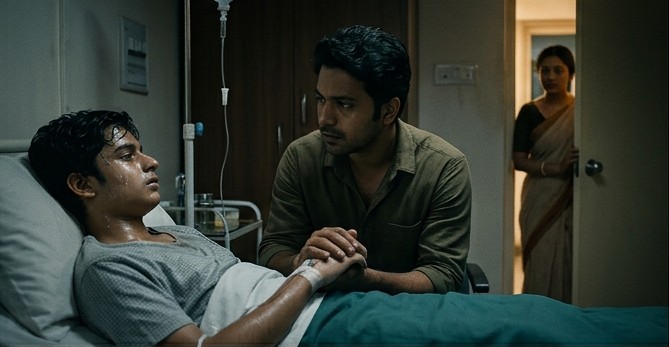
Ritwik fell ill—severe dengue.
Fever blurred days into nights.
Hospitals replaced home.
Madhumita’s strength began to crack.
Arjun did not step back.
He stepped forward.
He argued with doctors, managed logistics, stayed awake through nights that stretched endlessly.
He became the stability no one acknowledged—but everyone needed.
One night, Ritwik gripped his hand.
“Don’t go,” he murmured.
Arjun didn’t.
Madhumita watched Arjun from across the hospital room.
For the first time, she saw not a second husband—but a partner.
Not a replacement—but a presence.
And she realized something unsettling:
Love had returned—not as memory, but as reality.
Ritwik recovered physically before he did emotionally.
But something had shifted.
He no longer rejected Arjun outright.
He observed him.
Questioned him.
Even spoke to him—occasionally.
One evening, they sat by the lake.
“Why did you stay?” Ritwik asked.
Arjun answered simply, “Because you matter to her.”
Ritwik hesitated.
“And to you?”
Arjun paused.
“I’m still figuring that out.”
It was the most honest answer Ritwik had heard.
Change didn’t come dramatically.
It came quietly.
A shared meal.
A casual question.
A moment without tension.
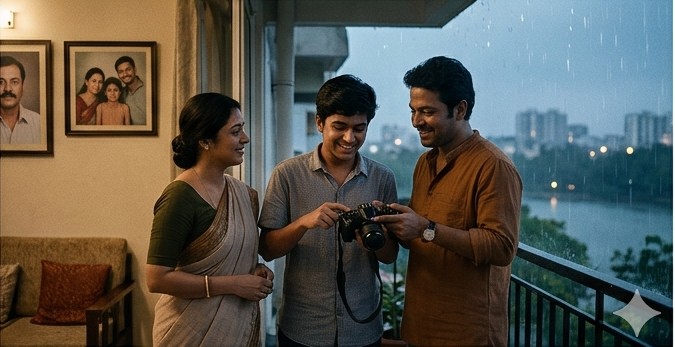
One day, Ritwik handed Arjun a camera.
“Show me how this works.”
That was enough.
The monsoon returned.
But this time, the house felt different.
Alive.
Not free of the past—but no longer trapped by it.
The living room wall changed.
Anirban’s photograph remained.
But beside it, a new frame appeared.
Not replacing.
Not competing.
Simply existing.
Madhumita stood by the window as rain fell.
She had loved once.
She loved again.
And both were true.
Ritwik joined her.
Arjun stood nearby.
No one spoke.
But no one needed to.
Kolkata continued as it always had—layered, emotional, unfinished.
Like the family in the apartment by the lake.
Life had not erased anything.
It had only made space.
For memory.
For pain.
For love.
And for a second monsoon that didn’t wash away the past—
—but taught them how to live with it.