
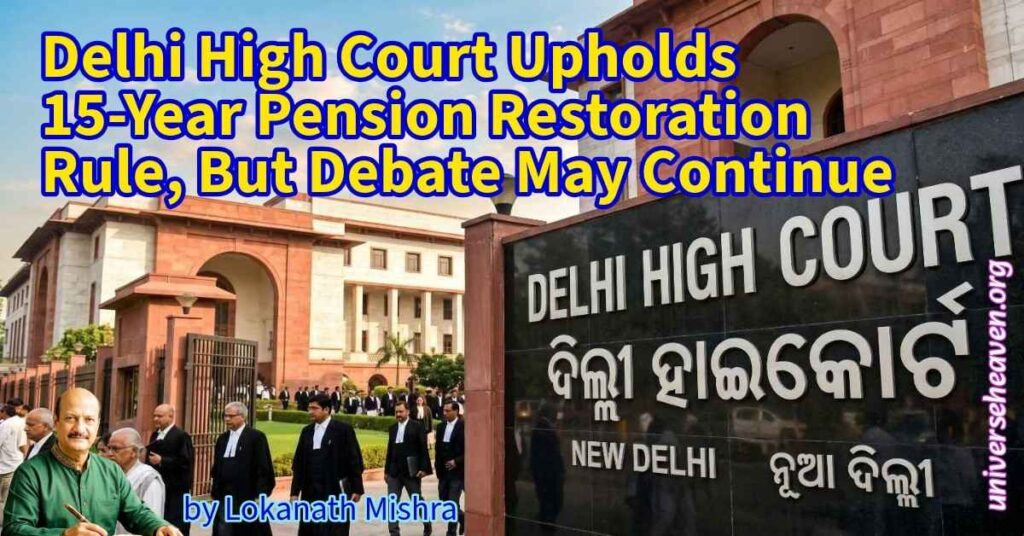
Delhi High Court Upholds 15-Year Pension Restoration Rule, But Debate May Continue
By Lokanath Mishra
In a landmark judgment with far-reaching implications for lakhs of pensioners across India, the Delhi High Court has upheld the validity of the fifteen-year restoration period applicable to commuted pensions under the Central Civil Services (Commutation of Pension) Rules, 1981. The decision reinforces the Government’s long-standing policy on pension commutation and rejects demands for a shorter restoration period. However, the controversy surrounding the issue may not end here, as affected pensioners still have the option of approaching the Supreme Court.
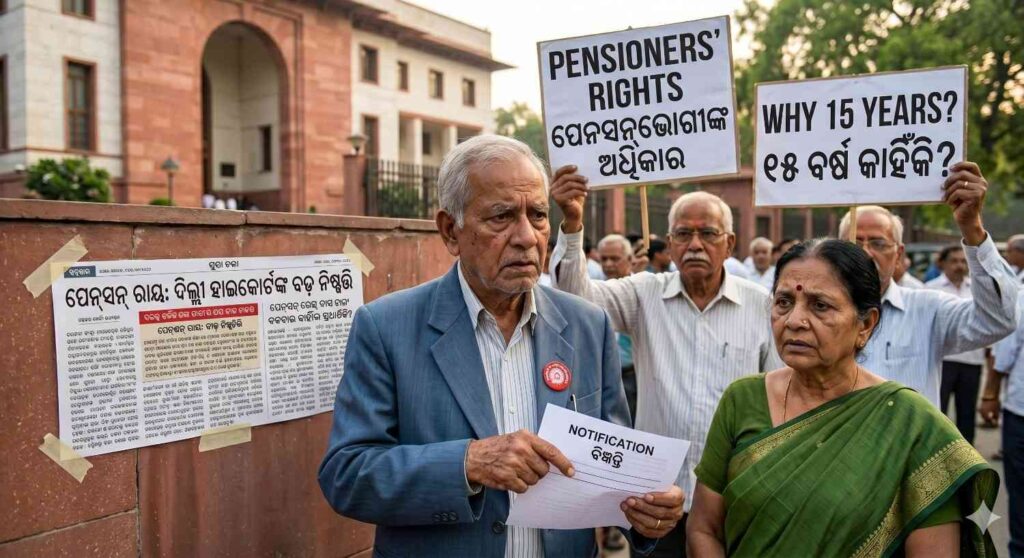
A Division Bench comprising Justice Anil Kshetarpal and Justice Amit Mahajan dismissed a batch of petitions filed by retired employees of Central Government departments, railways, paramilitary forces, banks and autonomous institutions. The petitioners had argued that changes in actuarial factors over the years have resulted in recovery of the commuted pension amount within twelve or thirteen years, making continued deductions up to fifteen years unfair and excessive.
The Court, however, rejected this contention. It held that pension commutation cannot be equated with a commercial loan where recovery can be calculated through simple arithmetic. According to the Bench, the commuted value of pension is determined through actuarial calculations that take into account life expectancy, mortality rates, discount factors and other financial variables affecting the pension system as a whole.

In its judgment, the Court observed that the fifteen-year restoration period represents an actuarial equilibrium designed for the entire pension framework rather than a recovery mechanism linked to individual pensioners. The Bench emphasized that courts cannot substitute expert actuarial assessments with simplified financial calculations advanced by individual retirees.
The Court further noted that both the Sixth and Seventh Central Pay Commissions examined the issue and consciously retained the existing fifteen-year period. Therefore, the continuation of the policy could not be described as arbitrary or unconstitutional.

The petitioners had relied on recommendations of the Department of Pension and Pensioners’ Welfare, the Supplemental Report of the Second National Judicial Pay Commission and examples from some State Governments where shorter restoration periods are in force. However, the High Court held that recommendations which have not been accepted by the competent rule-making authority do not have the force of law.
A significant aspect of the judgment is the Court’s observation that pensioners who voluntarily opted for commutation and received a substantial tax-free lump sum cannot later seek to retain the benefits of the scheme while rejecting its statutory conditions. The Bench held that once a pensioner exercises the option under the prescribed rules, the consequences attached to that choice remain binding unless the scheme itself is shown to be unconstitutional.
The Court also set aside interim directions issued by the Armed Forces Tribunal that had restrained further recovery of commuted pension. At the same time, it granted limited equitable relief by directing that recoveries deferred during the period of interim protection should not be collected in one lump sum but should continue beyond the fifteen-year period for the exact duration of the protection granted.
While the judgment represents a major victory for the Union Government, it may not be the final chapter in the dispute. Pensioners’ associations and retired employees’ groups have long argued that advances in actuarial methodology and changes in commutation tables justify a shorter restoration period. Many believe that the issue involves important questions concerning fairness, pension policy and the interpretation of constitutional principles.
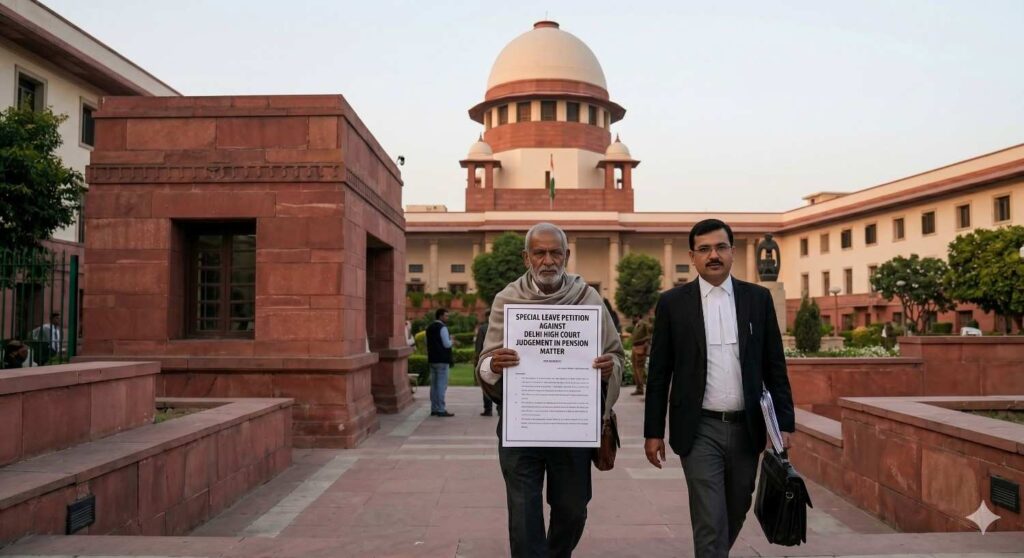
Given the large number of pensioners affected and the financial implications involved, there remains a possibility that the matter could be carried to the Supreme Court through a Special Leave Petition. If such an appeal is filed, the apex court may have an opportunity to examine whether the existing fifteen-year period continues to strike an appropriate balance between actuarial sustainability and the interests of pensioners.

Until then, the Delhi High Court’s ruling in Union of India and Others v. Sub Trilok Chand (Retd.) and Another stands as the governing legal position, reaffirming that pension commutation is a policy matter rooted in actuarial science and that courts should interfere only when a policy is demonstrably arbitrary or unconstitutional.
The judgment is likely to influence pension-related litigation across the country and may shape future discussions on pension reforms. Whether the matter concludes here or proceeds to the Supreme Court, the debate over the restoration period of commuted pensions is certain to remain a subject of considerable public interest.