
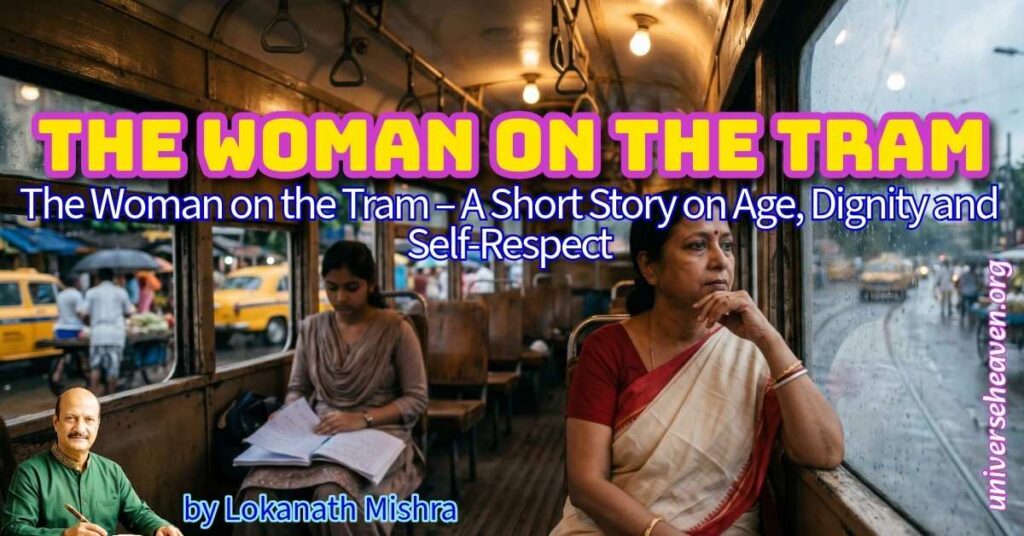
The Woman on the Tram
By Lokanath Mishra
When he said it, he did not even realize how cruel it sounded.
“After fifty,” he remarked while stirring his tea, “a woman stops being a companion and becomes a responsibility.”
The woman sitting across from him looked out through the café window toward the busy street of College Street, Kolkata.
Her name was Ananya Sen.
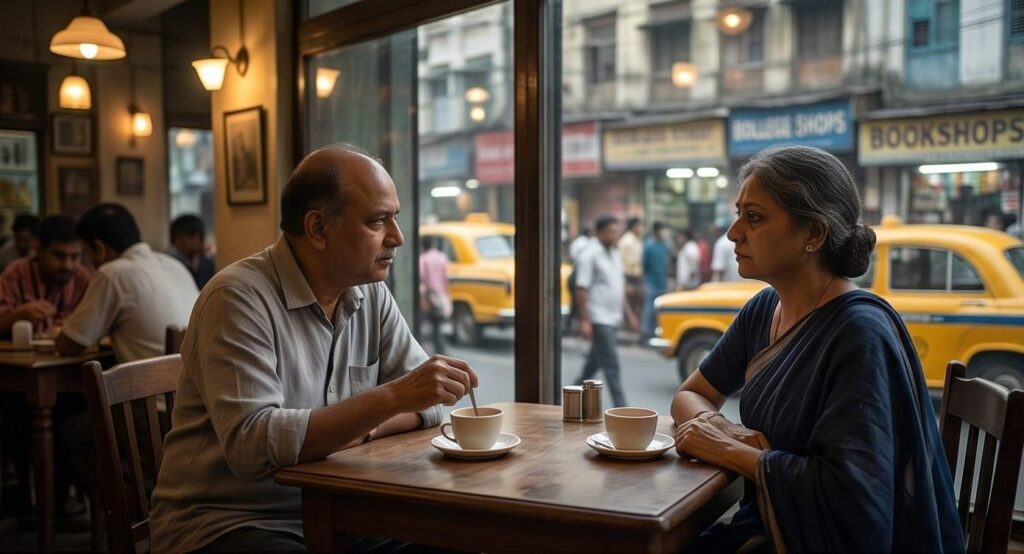
She was fifty-three years old.
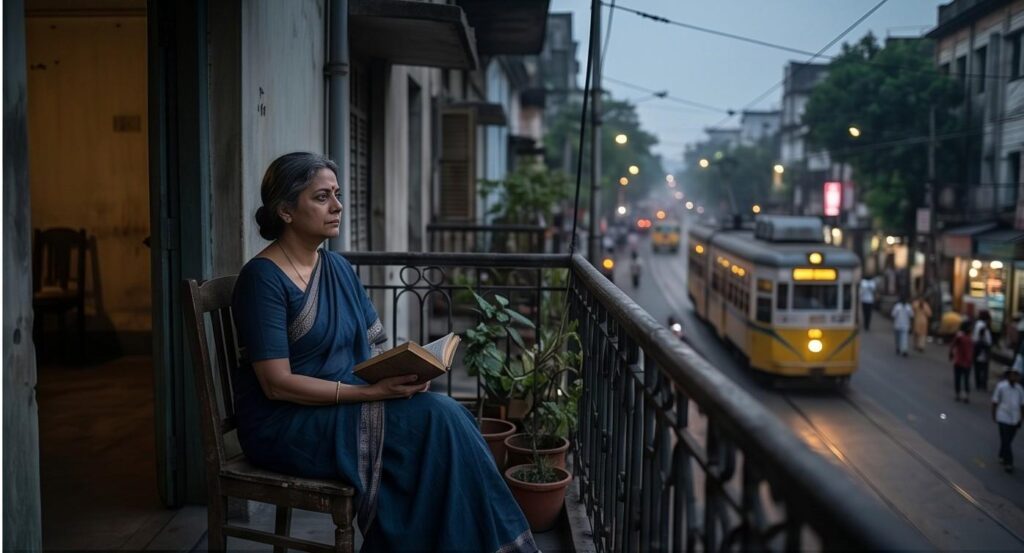
Seven years earlier, her husband had died suddenly from a heart attack. Their only daughter worked in Bengaluru and visited only a few times a year. Ananya lived alone in the old north Kolkata house where she had spent most of her married life.
The first years after her husband’s death were difficult.
The house felt too large and too silent.
Every room carried memories.
She often found herself preparing two cups of tea before remembering that there was no one to drink the second cup.
Many evenings she sat on the balcony watching the trams pass, wondering what purpose remained in her life.
Gradually, however, she learned to live differently.
She joined a neighborhood library.
She began teaching underprivileged children in the evenings.
She rediscovered her love for literature and music.
On Sundays she rode the tram through the city simply to watch life unfold around her.
She found comfort in small things—the fragrance of old books, the sound of rain on red-tiled roofs, and conversations with strangers.
One rainy afternoon she met Arindam Mukherjee.
He was sixty years old and recently retired from a government job.
They met while waiting at a pharmacy near Shyambazar.
A casual conversation about a delayed medicine delivery turned into a discussion about books, history, and Kolkata’s changing culture.
Over the following months they became friends.
They exchanged messages.
Sometimes they met at coffee houses.
Sometimes they walked through the grounds of Victoria Memorial or along the riverfront at Prinsep Ghat.
Ananya enjoyed the companionship.
For the first time in many years, she felt that someone listened to her thoughts.
Then came the afternoon that changed everything.
They were sitting in a small café near Park Street.
A group of college students occupied the next table, laughing and taking photographs.

Arindam watched them and smiled.
“Young people have so much energy,” he said.
Then, almost casually, he added, “Men naturally prefer younger women. After fifty, a woman becomes more of a burden than a partner.”
Ananya stared at him.
“What do you mean?” she asked quietly.
Arindam shrugged.
“You know. More health problems, more emotional baggage, fewer opportunities. A practical man doesn’t seek a relationship with an older woman.”
He spoke as if discussing the weather.
No anger.
No hesitation.
Just certainty.
For a moment Ananya felt a familiar pain.
The pain of being judged not for who she was, but for her age.
Not for her kindness.
Not for her intelligence.
Not for the years she had spent caring for family, overcoming grief, and rebuilding her life.
She looked around the café.
She saw young people beginning their journeys and older people carrying decades of experience.
Every face told a story.
Every wrinkle represented a battle won or lost.
How could anyone reduce a human life to a number?
Ananya finished her tea.
Then she stood.
“I thought you valued people,” she said calmly.
“But today you’ve shown me that you value only youth.”
Arindam looked surprised.
“I didn’t mean to offend you.”
“I know,” she replied. “That’s what makes it worse.”
She paid for her tea and walked out into the bustling Kolkata evening.
The city was alive.
Yellow taxis honked.
Trams moved slowly along their tracks.
Street vendors called out to customers.
The air carried the scent of rain and roasted peanuts.
As she walked, she reflected on her life.
She had survived loss.
She had raised a daughter.
She had built a new life from loneliness.
She had learned compassion, resilience, and wisdom.
None of those things disappeared with age.
In fact, they had grown stronger.
For the first time that day, she smiled.
A few weeks later Arindam sent several messages.
He apologized.
He asked to meet again.
He said she had misunderstood him.
Ananya read the messages but never replied.
Some doors, once closed, do not need to be reopened.
Months later, she was riding a tram through central Kolkata.
Across from her sat a young woman anxiously reading notes for an examination.
Ananya helped her find a missing page that had slipped to the floor.
The young woman thanked her warmly.
They began talking.
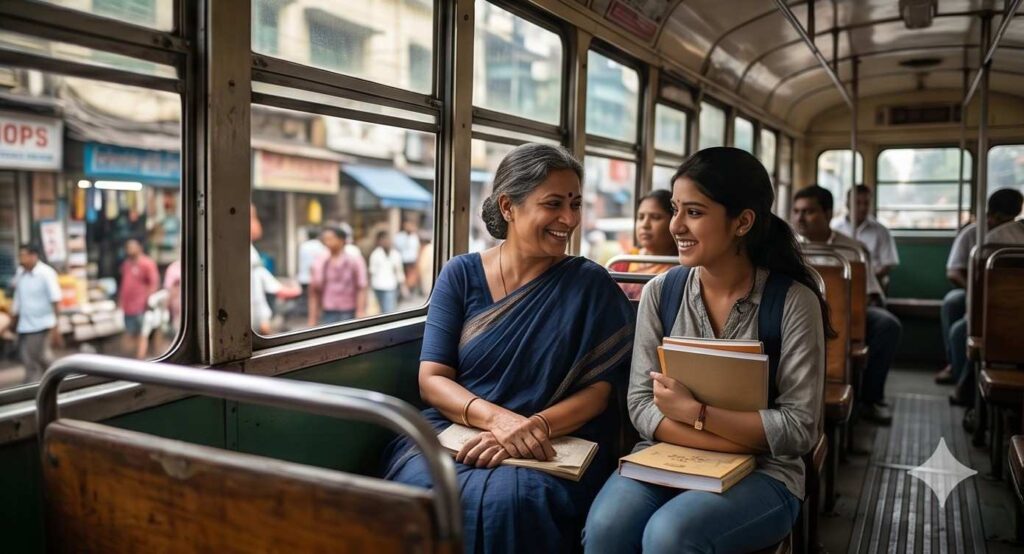
By the end of the journey both were laughing.
As Ananya stepped off the tram, she realized something important.
Life had not become smaller with age.
It had become richer.
Her worth had never depended on someone else’s approval.
It came from her character, her experiences, and the respect she gave herself.
And that was something no number could ever take away.
The End
Moral: A person’s value is not measured by youth, beauty, or age. True worth comes from dignity, wisdom, kindness, and self-respect. Those who judge others by age reveal more about themselves than about the people they judge.