
Mahabharata in Prose – Part 49 (continued)
A Story of Dvapara Yuga in Prose
by Lokanath Mishra
Time, though it moves silently, never stands still.
The years of exile for the Pandavas were gradually drawing toward their ordained end. Hardship had tempered them, suffering had deepened their wisdom, and restraint had strengthened their unity. Yet destiny, ever subtle, now began preparing them for a turning point—one that would shape the balance of power in the coming age.
For even as they lived in the forest, forces across Aryavarta were shifting.
The Gathering of Resolve
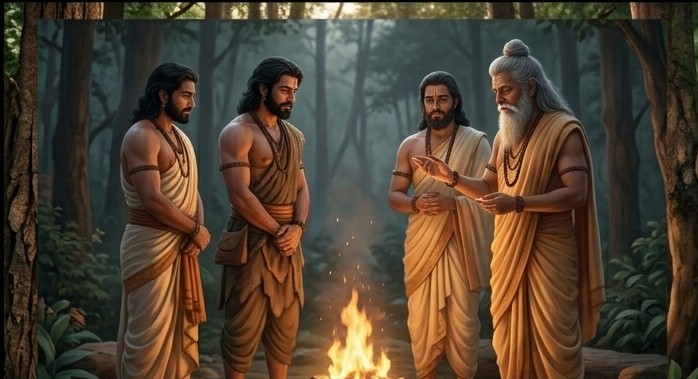
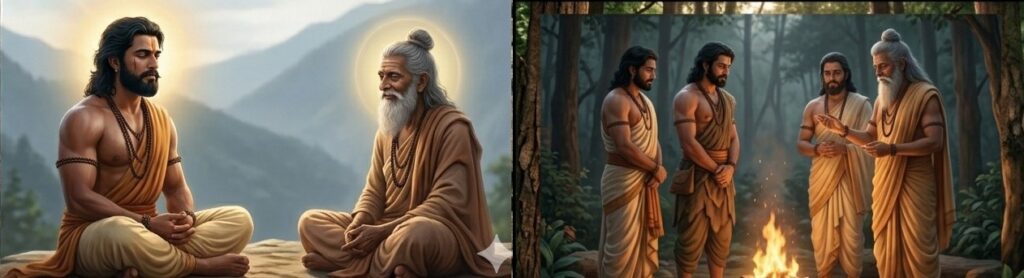
One evening in the Kamyaka forest, as the sun dipped low and the sky glowed with fading gold, the Pandavas sat together near their hermitage. A sacred fire burned gently, its flames dancing in rhythm with the quiet winds.
It was then that Arjuna, thoughtful and inwardly stirred, spoke:
“Brother,” he said to Yudhishthira, “we have endured much. But I sense that what lies ahead will demand far greater strength than we now possess.”
Bhima, ever direct, added,
“Strength we have, Partha. Let any foe come, and I shall crush them.”
Arjuna shook his head slightly.
“This is no ordinary conflict, Bhima. The Kauravas gather allies. Warriors of immense skill stand with them—men like Bhishma, Drona, and Karna. To face them, we must not rely on strength alone. We must acquire divine weapons.”
Yudhishthira listened in silence, his eyes steady, his mind weighing every word.
At last, he spoke:
“You are right, Dhananjaya. The war that awaits us will not be like any battle fought before. If divine powers are required to uphold dharma, then it is our duty to seek them.”
Draupadi, seated nearby, looked at Arjuna with a mix of pride and concern.
“The path of such power is not easy,” she said softly. “It demands sacrifice beyond measure.”
Arjuna bowed his head.
“I am prepared.”
The Counsel of Vyasa
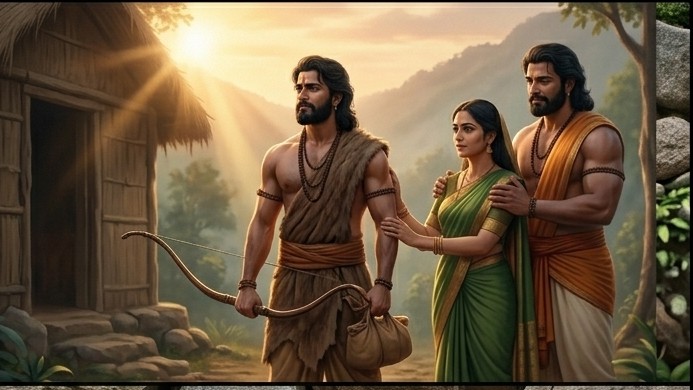
As if guided by divine will, that very night the great sage Vyasa arrived at their hermitage.
His presence filled the air with calm authority. The Pandavas rose at once and offered him respectful greetings.
After accepting their hospitality, Vyasa spoke:
“I know the thoughts that weigh upon your hearts. The time has come for preparation—not of the body alone, but of destiny itself.”
He turned to Arjuna.
“You must undertake a महान तपस्या. Through it, you shall please the gods and obtain celestial weapons—arms that will be necessary in the great war to come.”
Arjuna folded his hands.
“Guide me, revered one.”
Vyasa continued:
“You must journey north, into the higher realms of the Himalayas. There, through unwavering penance, you shall invoke the grace of the देवता. Among them, the favor of Lord Shiva will be paramount.”
The sage then imparted sacred knowledge—mantras, disciplines, and the inner focus required for such a quest.
Before departing, he blessed them all.
“Remember,” he said, “power without dharma leads to ruin. But power guided by righteousness becomes the instrument of destiny.”
Arjuna’s Departure
The next morning dawned with quiet solemnity.
Arjuna prepared to leave.
He donned simple garments, leaving behind the ornaments of royalty. His bow, Gandiva, remained with him—his constant companion. But his journey now was not toward battle, but toward transcendence.
One by one, he approached his loved ones.
To Yudhishthira, he bowed deeply.
“Your guidance is my strength.”
Yudhishthira placed his hand upon Arjuna’s head.
“Walk the path of dharma, and no force shall overcome you.”
Bhima embraced him firmly.
“Return with power that even the gods shall respect.”
Nakula and Sahadeva offered their silent, heartfelt support.
Then Arjuna turned to Draupadi.
For a moment, words failed them both.
At last, Draupadi spoke:
“May your path be protected, and your उद्देश्य fulfilled. Return not just stronger—but victorious in spirit.”
Arjuna nodded, his resolve unshaken.
Without looking back, he began his journey.
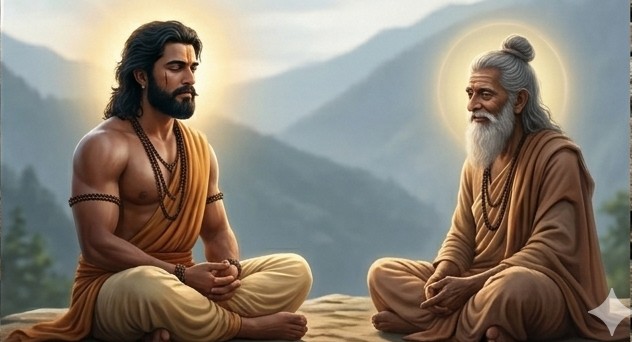
The Path of तपस्या
Arjuna traveled far—beyond familiar lands, beyond the reach of kingdoms.
He crossed rivers with icy currents, climbed steep mountain paths, and entered forests untouched by human presence. The air grew thinner, the silence deeper.
At last, he reached the sacred heights of the Himalayas.
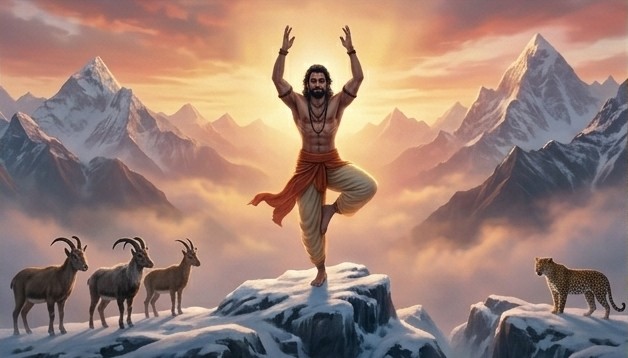
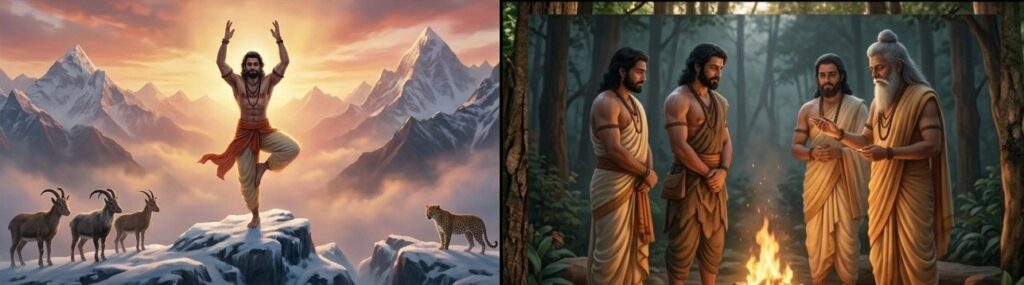
There, surrounded by towering peaks and eternal snow, Arjuna began his तपस्या.
He stood in meditation, focusing his mind with unwavering discipline. Days passed into weeks. He reduced his food, controlled his breath, and withdrew his senses from the world.
His concentration became so intense that even the elements seemed to acknowledge it.
Winds softened around him. Animals approached without fear. The very earth seemed to support his purpose.
Yet, तपस्या is never without परीक्षण.
The gods themselves watched.
And soon, they would test the resolve of the Pandava prince.
The First Signs of Divine Attention
One day, as Arjuna sat in deep meditation, a radiant figure appeared before him—disguised as a humble ascetic.
It was Indra, his divine father, though not yet revealed in full glory.
The ascetic spoke gently:
“O warrior, your तपस्या is admirable. But what do you seek through such कठोर साधना?”
Arjuna opened his eyes, calm and composed.
“I seek the strength to uphold dharma. I seek weapons that will allow me to protect righteousness.”
The ascetic studied him closely.
“Then your path is true. But remember—greater trials await you. Be steadfast.”
With that, the figure vanished.
Arjuna closed his eyes once more.
His determination had only deepened.
The Looming Test
Unseen by Arjuna, forces were already in motion.
The gods had taken note of his तपस्या. But before granting him divine weapons, they would test his courage, humility, and devotion.
Among these tests, one would stand above all—
A meeting in the forest,
A challenge unlike any other,
Thus begins the महान अध्याय of Arjuna’s divine quest—
where man would stand before god,
and through संघर्ष, earn immortality in legend.
(Continued in Part 50…)