
The Unbreakable Spirit of Kala Bagai Chandra ( USA) : A Heartwarming Tale of Love, Loss, and Triumph:
By Lokanath Mishra:
In the early 20th century, a young woman named Kala Bagai Chandra embarked on a journey that would make her a legend in the Indian-American community. Born in 1893 in Amritsar, Punjab, Kala arrived in San Francisco in 1915 with her husband, Vaishno Das Bagai, and their three sons, by a ship,leaving behind the familiarity of her homeland. As a 22-year-old mom who didn’t speak English, she faced daunting challenges in a foreign land, but her love for her family and determination to build a new life kept her going.

Tragedy struck in 1928 when Vaishno took his own life after being denaturalized due to the Supreme Court case United States v. Bhagat Singh Thind. Kala’s world was shattered, but she refused to let circumstances define her. With remarkable fortitude, she worked tirelessly as a cook in restaurants and private homes to support her family, often sacrificing her own needs for the sake of her children. Despite the odds, Kala managed to stay in the USA with her sons, determined to build a better life for them.

In 1934, Kala married Mahesh Chandra, who was a cook in a restaurant and ten years junior to her. However with much difficulties, together , they opened a small restaurant, which eventually grew into a thriving business. Kala gave birth to two more sons with Mahesh, and their family business expanded to include multiple restaurants and hotels. By the 1950s, they owned 13 restaurants and five hotels, a testament to Kala’s entrepreneurial spirit and perseverance. The aroma of freshly baked naan and the sound of laughter filled their homes, creating a warm and welcoming atmosphere for all.

Kala’s contributions to the Indian-American community are immeasurable. Her home became a hub for Indian immigrants, offering comfort, guidance, and a sense of community. She would often cook traditional meals for her guests, sharing stories of her homeland and offering words of encouragement.
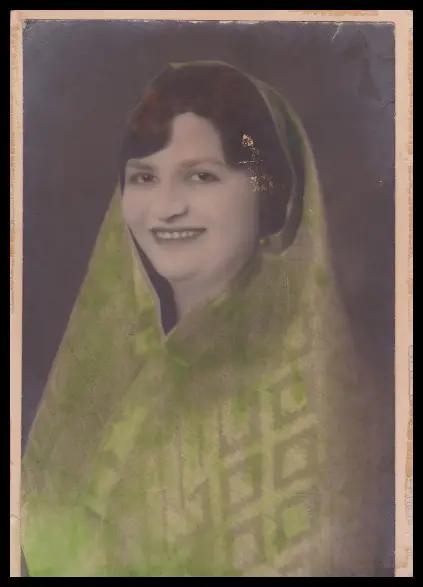
Known as “Mother India” or “Jhaiji,” Kala was a beloved figure who paved the way for future generations of Indian immigrants. Her legacy extends beyond her family and community, inspiring anyone facing challenges in a new environment.
After Kala’s passing in 1983, a tribute was held in her honor, celebrating her life and contributions to the Indian-American community. Her story continues to inspire people today, a testament to the power of determination, adaptability, and community building. Kala Bagai Chandra’s unbreakable spirit and entrepreneurial drive have left an indelible mark on the Indian-American community, and her legacy will continue to inspire generations to come, reminding them of the importance of love, family, and community.


Could you please tell me the source for this statement?
With remarkable fortitude, she worked tirelessly as a cook in restaurants and private homes to support her family, often sacrificing her own needs for the sake of her children.
Kala Bagai came to the US with considerable wealth, and received a large life insurance payment when her husband committed suicide. As far as I know she never worked as you claim. She lived a life of privilege, and managed her investments in stocks and real estate.
Could you please tell me the source for this statement
In 1934, Kala married Mahesh Chandra, who was a cook in a restaurant and ten years junior to her.
As far as I know, Mahesh Chandra was not ten years her junior, and he was not a cook in a restaurant.
Could you please tell me the source of this statement.
However with much difficulties, together , they opened a small restaurant, which eventually grew into a thriving business.
I am not aware of any difficulties they faced, nor that they created a thriving business.
This is definitely completely false
Kala gave birth to two more sons with Mahesh,
Kala Bagai had three sons with VD Bagai, and no children with Mahesh Chandra.
Could you please provide the source for the following statement
their family business expanded to include multiple restaurants and hotels. By the 1950s, they owned 13 restaurants and five hotels, a testament to Kala’s entrepreneurial spirit and perseverance. The aroma of freshly baked naan and the sound of laughter filled their homes, creating a warm and welcoming atmosphere for all.
I am not aware of any records about this family business, Kala Bagai’s role in it, or what was happening in their home. It does not match what history we have, as far as I know. But all you have to do is give your source.
Kala Bagai was the wealthy wife of British colonial informant Vaishno Das Bagai, whose espionage activities targeted members of the San Francisco and Berkeley–based anti‑colonial Ghadar movement. Despite later public denials, archival records identify Vaishno Das Bagai as an “English spy,” and the Bagai family’s comfortable lifestyle was supported by the proceeds of his work as a British informant.
In recent years, a false narrative about Kala Bagai has gained traction—portraying her as a victim of racism and a community activist—despite the absence of primary‑source evidence supporting these claims. This narrative has been amplified by the South Asian American Digital Archive (SAADA), an organization financially supported by Kala Bagai’s granddaughter, and by Berkeley activists such as Barnali Ghosh and her husband Anirvan Chatterjee. Neither Ghosh nor her collaborators, including Monisha Bajaj, have formal historical training, yet they have played a central role in promoting this unverified story.
During the COVID period, Barnali Ghosh and her network successfully lobbied the Berkeley City Council to rename a downtown street after Kala Bagai. Their campaign relied on a narrative that lacks archival grounding, and Ghosh’s political efforts were also financially supported by Kala Bagai’s granddaughter. To reinforce this story, Ghosh and her collaborators created circular references, Wikipedia pages, and public‑facing materials that present the Bagai narrative as established history. Even scholars such as Arko Dasgupta have unfortunately repeated these claims without consulting independent primary sources.
For those seeking evidence‑based history, the documented story of Kala Bagai and her husband—who betrayed Ghadar Party freedom fighters in Berkeley and San Francisco in the early 1900s—is available at The Real Kala Bagai Story website.