
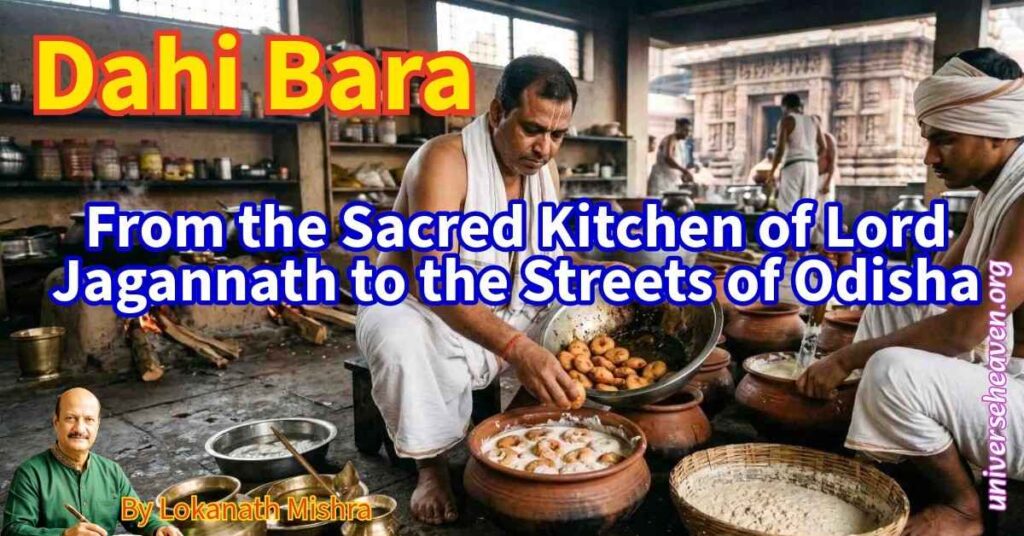
Dahi Bara : From the Sacred Kitchen of Lord Jagannath to the Streets of Odisha
By Lokanath Mishra
Odisha is renowned for its rich culinary heritage, and among its most beloved traditional delicacies is Dahi Bara, a preparation that occupies a unique place in both religious and social life. While today Dahi Bara is popularly sold in markets and roadside stalls across the State, its roots can be traced to the sacred traditions associated with Lord Jagannath of Puri.
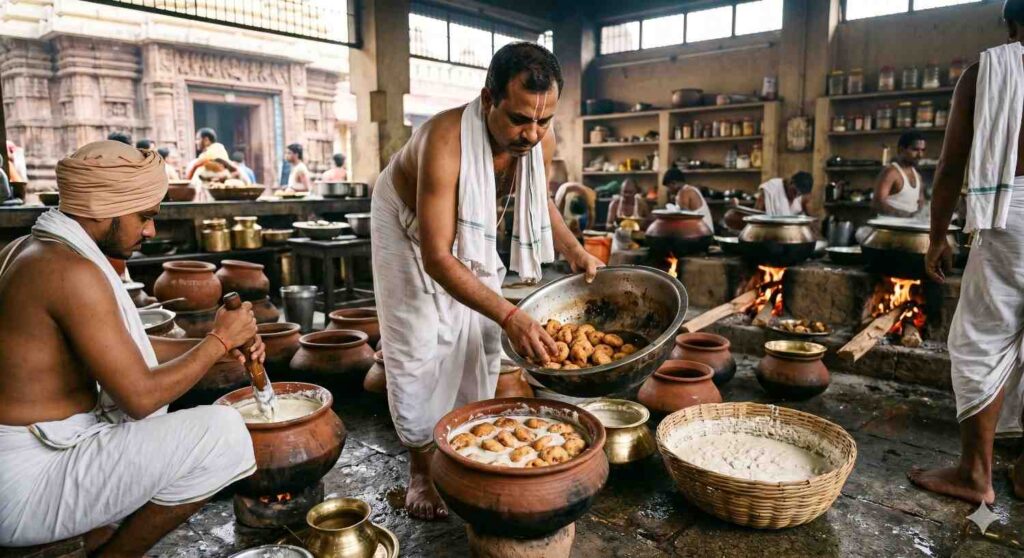
The world-famous temple of Lord Jagannath is not merely a place of worship; it is also home to one of the largest and oldest temple kitchens in the world. Every day, hundreds of varieties of food are prepared in the temple kitchen and offered to Lord Jagannath, Lord Balabhadra, Devi Subhadra and Sudarshan. After the offering, these sacred foods become Mahaprasad, revered by millions of devotees.
Among the many items prepared in the temple kitchen is Dahi Bara, which is offered along with other food items as part of the daily rituals. This association with the Jagannath tradition elevates Dahi Bara from an ordinary food item to one connected with the sacred culture of Odisha. The preparation reflects the simplicity, purity and nutritional wisdom that characterize the culinary traditions of the Jagannath Temple.
Two Distinct Varieties of Dahi Bara
Traditionally, Dahi Bara is prepared in two forms:
- Sweet Dahi Bara
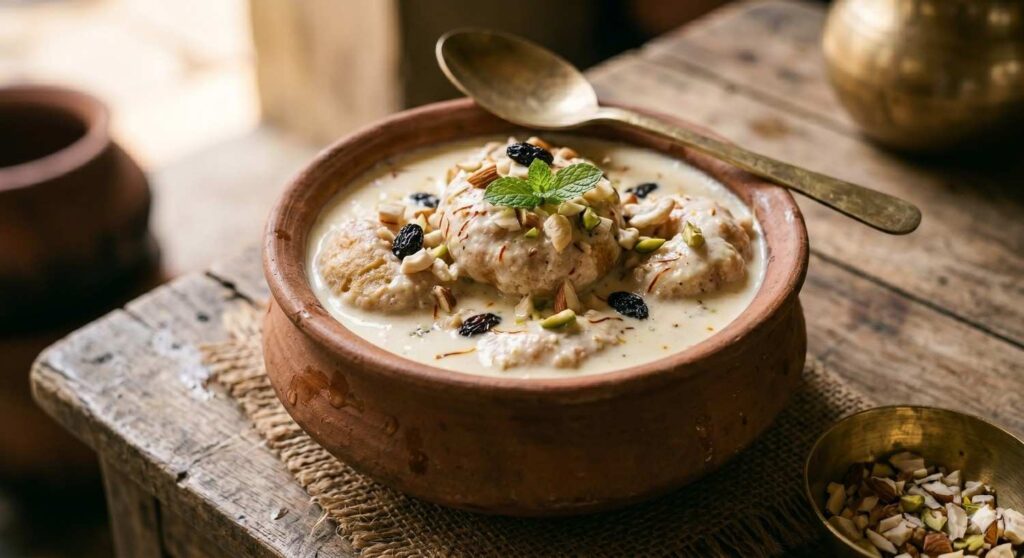
Sweet Dahi Bara consists of soft lentil dumplings soaked in sweetened curd. The sweetness is usually enhanced with sugar, jaggery or other natural sweeteners. This variety is mild, refreshing and pleasant to the palate. It is commonly consumed by itself as a complete snack or dessert. The harmonious blend of curd and sweetness makes it a satisfying food without the need for any accompanying dish.
- Salty Dahi Bara
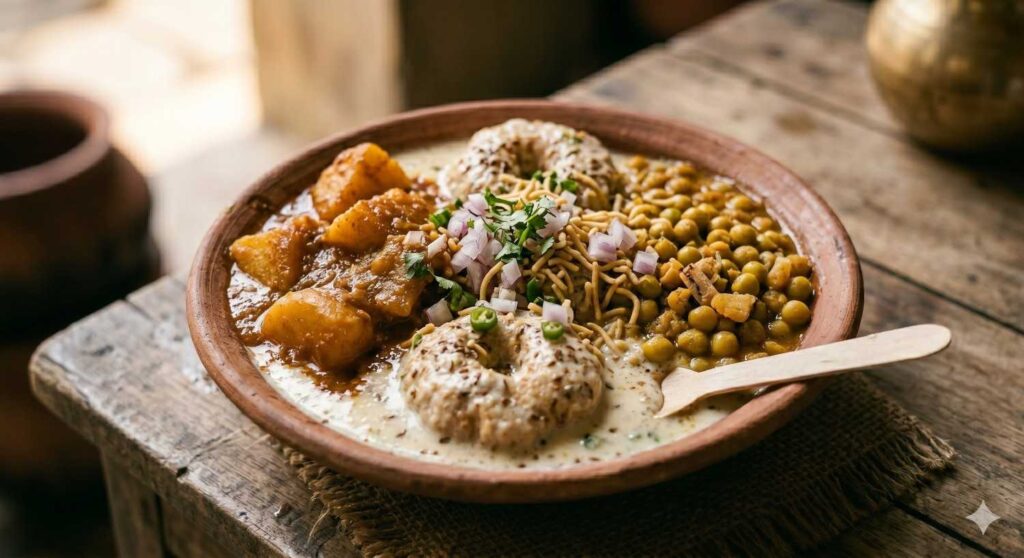
The second variety is Salty Dahi Bara, which contains lentil dumplings immersed in salted and spiced curd. Unlike its sweet counterpart, this preparation is generally not consumed alone. In Odisha, it is traditionally served with Aloo Dama (spiced potato curry) and Matar Guguni (curried yellow peas).
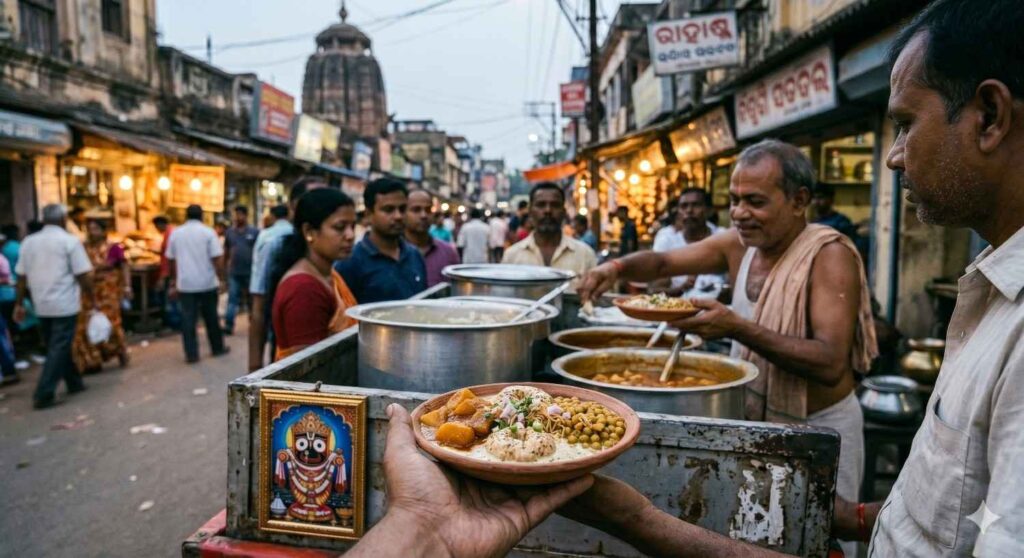
The combination of Dahi Bara, Aloo Dama and Guguni has become one of the most popular street foods of Odisha. The spicy and savoury flavours of Aloo Dama and Guguni complement the mild sourness of the curd, creating a balanced and enjoyable taste experience. The three items together provide a satisfying blend of carbohydrates, proteins, fats and probiotics.
Why Salty Dahi Bara Is Traditionally Accompanied by Other Dishes
Over generations, Odia food culture has developed the practice of serving salty Dahi Bara with Aloo Dama and Guguni. There are both culinary and nutritional reasons for this tradition.
From the culinary perspective, salty Dahi Bara alone has a comparatively bland taste. The addition of spicy potato curry and flavourful peas enhances the overall appeal and makes the dish more enjoyable. The contrast between cool curd and warm spicy accompaniments creates a balance that is highly appreciated by consumers.
From the nutritional standpoint, curd-based foods are often considered cooling in nature. Consuming large quantities of salty Dahi Bara alone, especially when prepared with excessive salt or sour curd, may not provide a balanced meal. The addition of Aloo Dama and Guguni contributes energy, fibre and plant protein, thereby making the dish more wholesome and satisfying. Traditional food wisdom in Odisha has therefore favoured the combined serving rather than the isolated consumption of salty Dahi Bara.
Cultural Significance in Odisha
Dahi Bara has become an inseparable part of Odia social life. It is enjoyed during fairs, festivals, religious gatherings and family celebrations. In cities such as Cuttack, Bhubaneswar and Puri, Dahi Bara stalls attract customers throughout the day. The dish symbolizes the ingenuity of Odia cuisine in transforming simple ingredients such as black gram, curd, potatoes and peas into a delightful culinary experience.
Its connection with the sacred traditions of Lord Jagannath further strengthens its cultural importance. Every serving of Dahi Bara carries with it echoes of the temple kitchen, centuries of culinary evolution and the collective food heritage of Odisha.
Conclusion
Dahi Bara is much more than a popular snack. It is a food deeply intertwined with the religious traditions of Lord Jagannath and the cultural identity of Odisha. The sweet variety stands independently as a refreshing delicacy, while the salty variety achieves its full flavour and nutritional balance when accompanied by Aloo Dama and Matar Guguni. Together, these preparations represent the wisdom, diversity and sacred culinary heritage that have made Odia cuisine one of the richest food traditions in India.